Ultra-high-resolution digitisation makes it possible to read details in works of art that would otherwise remain invisible to the naked eye.
With this principle in mind, Haltadefinizione carried out the gigapixel acquisition of Madonna and Child by Ignazio Francesco Muligino, the 1692 masterpiece at the centre of the exhibition MIRABILIA GRAPHICA. The Micrographic Calligrams of Ignazio Muligino, which opened on 18 June at Museo Galileo in Florence.
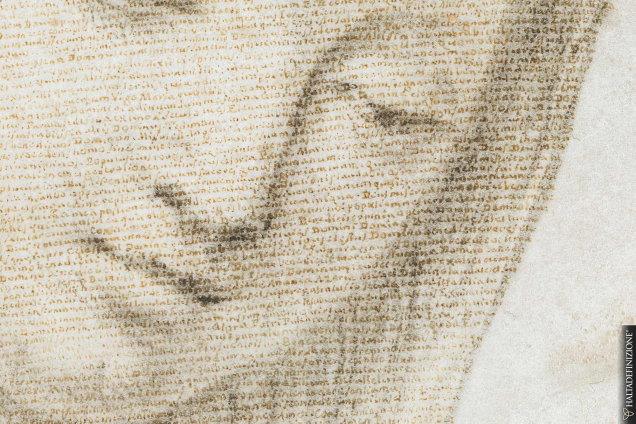
Muligino’s Madonna and Child is a micrographic calligram: an image composed entirely of minuscule script, condensed into an area measuring approximately thirty by twenty centimetres, its individual characters legible only with the aid of a magnifying lens. At first glance, the naked eye perceives only the image of the Virgin; on closer inspection, however, the intricate pattern of letters from the Officium Beatae Mariae Virginis emerges, giving form to the image. The inscription surrounding the work invites viewers to read it cum mycroscopion, meaning with a microscope.

To produce a file capable of reproducing every single letter in the calligram, Haltadefinizione carried out a matrix-based macro acquisition campaign comprising more than 200 shots, which were subsequently combined into a single gigapixel image at 3,000 ppi. This exceptionally high resolution allows viewers to move quickly from an overall view of the work to the individual minuscule characters.
The exhibition at Museo Galileo places Muligino’s calligrams within the context of the early spread of the microscope in Europe. In the seventeenth century, the work was created to be read through a scientific instrument capable of revealing what the human eye could not perceive. Today, the gigapixel image makes this experience accessible to a wider audience through the touchscreen station installed along the exhibition route.
The project developed with Museo Galileo demonstrates how ultra-high-definition imaging can open up new avenues for research and public engagement for works that, by their very nature, test the limits of human vision. Among the projects completed to date, it is one of the clearest examples of how this technology is transforming access to cultural heritage.
The exhibition MIRABILIA GRAPHICA. The Micrographic Calligrams of Ignazio Muligino, curated by Filippo Camerota and organised with the support of Fondazione CR Firenze, is open at Museo Galileo in Florence until 18 October 2026.